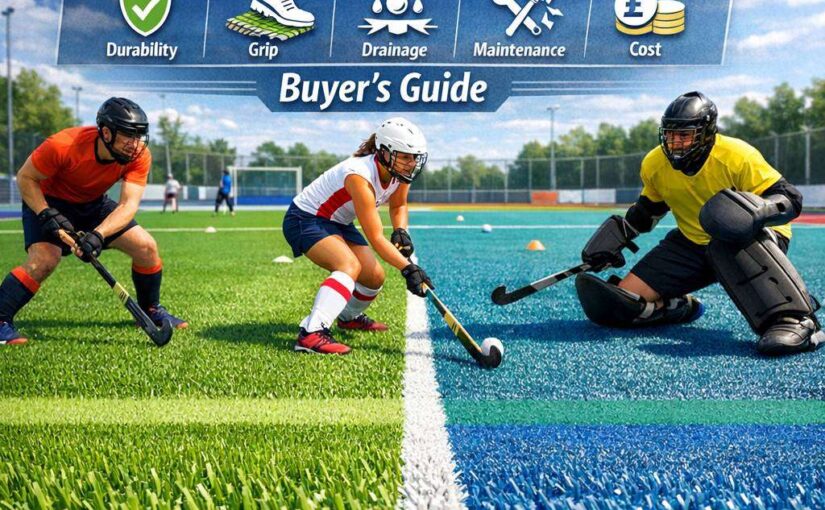
Choosing the right hockey pitch astroturf is a decision that affects play quality, safety, maintenance, and long-term cost. This guide provides an expert overview to help you navigate the options, assess your facility’s needs, and select a surface that will deliver consistent performance for years to come.
In modern hockey facilities, the surface is as important as the rules of the game. A well-chosen artificial grass for hockey can optimise ball speed, ball bounce, and player comfort, while a poorly chosen surface can lead to unpredictable play and frequent maintenance woes. By understanding the key factors behind hockey pitch resurfacing, you can make an informed investment that supports both training and competitive matches.
Hockey pitch resurfacing
Hockey pitch resurfacing involves replacing or upgrading the top layer of your surface to restore its play characteristics and extend the lifespan of the pitch. When evaluating resurfacing options, factors to consider include pile height, fibre type, stitch density, and infill material. Longer pile heights tend to produce softer touches, which can be advantageous for developing skills, while shorter piles usually offer better ball roll and speed. Fibre technology—such as heat-set or monofilament fibres—affects durability and Nike-style consistency on wet or dry conditions. Infill materials, typically sand or crumb rubber, influence ball bounce, traction, and maintenance requirements.
For many facilities, resurfacing is the most cost-effective route when the current surface has degraded, but retains a sound base. A professional assessment will measure surface porosity, drainage capacity, and the structural integrity of the sub-base. Post-installation testing should verify uniformity of pile height, surface hardness (to prevent injuries), and traction under a range of temperatures. Regular maintenance planning, including cleaning and occasional repairs, can dramatically extend the interval between resurfacing projects.
Artificial grass for hockey
Artificial grass for hockey combines durability with performance-specified pile heights and fibre construction to mimic natural turf play characteristics. When selecting artificial grass for hockey, consider:
- Pile height and density: Longer pile provides a softer touch but can reduce speed; higher density generally yields more uniform ball behaviour.
- Fibre type: Monofilament fibres offer good durability and consistent ball roll; fibrillated or blended fibres may provide a different feel and cost profile.
- Infill choice: Sand infill aids ball control and stability; crumb rubber offers resilience and shock absorption but may require additional environmental considerations.
- Backing quality: A strong, permeable backing supports drainage and reduces risk of fibre shedding.
- Drainage: Proper drainage is essential to maintain playability in wet conditions and to prolong the life of the pitch.
A quality hockey pitch installation starts with a precise specification of these elements, matched to your climate, typical weather patterns, and usage level. For outdoor venues, UV stability and resistance to temperature cycling are critical, while indoor facilities may prioritise consistent ball contact and minimal maintenance.
Hockey pitch astroturf surfaces demand expert maintenance to maintain good ball roll, grip, and safety for players. Regular bristle brushing, debris clearing, and infill checks help preserve consistent play characteristics and extend the turf’s lifespan. Proper line markings and routine inspections ensure compliance with league requirements. For dedicated maintenance guidance and professional services, explore trusted resources and providers that specialize in hockey pitch astroturf care. https://www.artificialgrassmaintenance.co.uk
Hockey pitch installation
Hockey pitch installation is a specialised process that requires careful site preparation, precise levelling, and controlled laying of the artificial grass for hockey. The installation sequence typically includes:
- Sub-base assessment and preparation: Ensuring a stable, well-draining foundation is essential to long-term performance.
- Drainage design: A well-designed drainage system prevents waterlogging and maintains playability after rain.
- Laying the turf: The turf is laid in panels or rolls, with attention to seam alignment and fibre orientation for consistent ball behaviour.
- Weaving or attaching: Depending on the system, artificial grass for field hockey is secured to the sub-base with adhesive or mechanical fixing.
- Infilling: Sand or alternative infill is distributed evenly to achieve the correct weight, balance, and fibre stability.
- Surface testing: After installation, the surface is tested for hardness, ball return properties, and uniformity across the field.
Working with an experienced contractor is vital. They will provide a detailed project plan, schedule, and post-installation care guidance. Ensure the contractor offers warranties and a maintenance package to protect your investment over time.
Artificial grass for field hockey
Artificial grass for field hockey must balance speed, control, and durability. Key performance indicators include ball roll consistency, friction levels, and the surface’s ability to resist wear in high-traffic zones. When selecting artificial grass for field hockey, you should:
- Match the surface to your climate: In wetter climates, proper drainage and moisture management prevent slick conditions. In dry climates, ensure the fibre remains resilient under heat.
- Consider player safety: A well-designed surface reduces harsh impact and minimises injury risk. Look for certified hardness ratings and compliant maintenance regimes.
- Plan for maintenance: Regular cleaning and pitch chemical treatment, when required, help preserve playability and hygiene.
- Review environmental impact: Infill materials and drainage influence sustainability. Some facilities opt for lower-emission, recyclable infill options.
A well-engineered installation will deliver predictable ball behaviour, enabling players to develop precision passing, accurate tackling, and consistent shooting under varying weather conditions.
Hockey pitch repairs
Over time, hockey pitch repairs become necessary to address potholes, stitching separations, or degraded edges. Timely repairs protect performance and prevent more extensive damage. Common repair tasks include:
- Surface cleaning and debris removal: Regular cleaning reduces abrasive wear and preserves traction.
- Stitching or seam repair: Damaged seams can create unpredictable ball motions and pose tripping hazards.
- Patching and resurface work: Localised patches restore uniformity without a full reseal.
- Infilling check: Ensuring infill levels remain even across the field is vital for consistent ball response.
Choosing a reputable repairs partner ensures repairs are completed to exacting standards, maintaining the surface’s integrity and protecting your investment.
Hockey pitch chemical treatment
Hockey pitch chemical treatment includes safe, purpose-built solutions to control algae, moss, and mould, as well as to protect the surface from fungal growth and staining. When applying chemical treatments:
- Follow manufacturer guidelines and local regulations.
- Use products compatible with your turf system and infill.
- Schedule treatments to minimise disruption to training and matches.
- Monitor environmental impact, especially in proximity to watercourses or sensitive habitats.
Regular, targeted chemical treatments can extend the life of your pitch and maintain hygienic playing conditions without compromising performance.
FAQ: Hockey Pitch Astroturf
What is hockey pitch astroturf?
Hockey pitch astroturf refers to the artificial turf surface designed for field hockey. It uses synthetic fibers and a smooth, water-based or sand-filled backing to provide a consistent, fast-playing surface that mimics real grass while reducing maintenance.
What are the main types of astroturf used for hockey pitches?
- hockey grass (sand-filled): tufts of artificial grass with silica sand infill for grip and stability.
- hockey plain (water-based): a smoother surface with minimal infill, supported by a water-permeable backing for a faster, true-bounce ball.
- hybrid systems: combine elements of different surfaces to optimise speed, ball roll, and durability.
Why choose astroturf for a hockey pitch?
Astroturf offers consistent ball roll, reduced weather impact, lower maintenance than natural grass, higher durability, and the ability to play in a wider range of climates.
How is a hockey pitch astroturf installed?
Installation involves:
- site preparation and drainage assessment
- laying a stable base (concrete or compacted sub-base)
- installing the synthetic turf panels or tufts
- infill application (sand or water-based systems)
- brushing and top-coating for seam and infill leveling
- final drainage testing and line marking
What maintenance does an astroturf hockey pitch require?
- Regular brushing to keep fibers upright
- Infill testing and top-up as needed
- Cleaning to remove debris and leaves
- Periodic deep cleaning and disinfection
- Inspection of seams, fixing points, and drainage
- Replacing worn sections over time
How long does an astroturf hockey pitch last?
With proper maintenance, a good quality hockey astroturf can last 8–15 years, depending on usage, climate, and maintenance frequency. Premier venues may see longer lifespans with diligent care.
What playing characteristics should I expect on an astroturf hockey pitch?
- Consistent ball speed and bounce
- High-quality ball control and passing accuracy
- Varied speed depending on infill and water-based vs. sand-filled systems
- Generally faster play compared with natural grass
Is astroturf suitable for all weather conditions?
Most modern hockey pitches are designed for diverse weather. Water-based systems excel in dry conditions with fast ball speed, while sand-filled systems can perform well in a range of weather but may require more grooming after rain.
How do I choose the right astroturf for my hockey facility?
Consider:
- Expected usage: training vs. competitive matches
- Climate and drainage needs
- Desired ball speed and playing characteristics
- Budget for installation and ongoing maintenance
- Maintenance capabilities and access to skilled technicians
What are the environmental considerations of hockey pitch astroturf?
- Water-based systems may use less infill but require water for maintenance and cooling
- Sand-filled systems use silica sand as infill
- End-of-life recycling options vary by product; many manufacturers offer take-back or recycling programs
Can I rent or refurbish an existing hockey astroturf pitch?
Yes, many facilities upgrade or refurbish aging pitches by resurfacing, re-infill, and recalibrating drainage. Consultation with a certified installer is recommended to assess surface condition and compatibility with updated standards.
Where can I find certified installers or suppliers for hockey pitch astroturf?
- Official turf manufacturers and distributors
- Regional sports facility contractors
- Industry associations and standard-setting bodies for field hockey surfaces
- Local clubs and facility managers with experience in astroturf installations
If you’d like, I can tailor this FAQ to a specific region, brand, or target audience (e.g., school leagues, clubs, or professional facilities).
Hockey pitch cleaning
Efficient hockey pitch cleaning is essential for performance, aesthetics, and longevity. Cleaning regimes typically include:
- Debris removal: Regular brushing or blowing to remove leaves, dirt, and foreign objects.
- Infill maintenance: Periodic redistribution to maintain even pile height and consistent play characteristics.
- Stain removal: Targeted cleaning for oil, tyre marks, or organic stains using appropriate cleaners.
- Surface sanitisation: Occasional sanitising to reduce microbial growth and maintain hygiene for players.
A structured cleaning programme reduces wear, preserves traction, and supports a safer playing environment.
Hockey pitch astroturf
Hockey pitch astroturf is a practical term representing the synthetic surface used for field hockey. When evaluating this option, look for manufacturers with proven track records, robust warranties, and clear maintenance guidelines. Verify compatibility with your existing facility, drainage capabilities, and the availability of local support for repairs and chemical treatments. A high-quality hockey pitch astroturf system delivers reliable ball control, consistent bounce, and consistent performance across a range of weather conditions.
By prioritising a balanced approach—considering resurfacing schedules, the best artificial grass for hockey, installation quality, and ongoing maintenance—you can secure a hockey pitch that supports skill development, competitive play, and long-term operational efficiency.